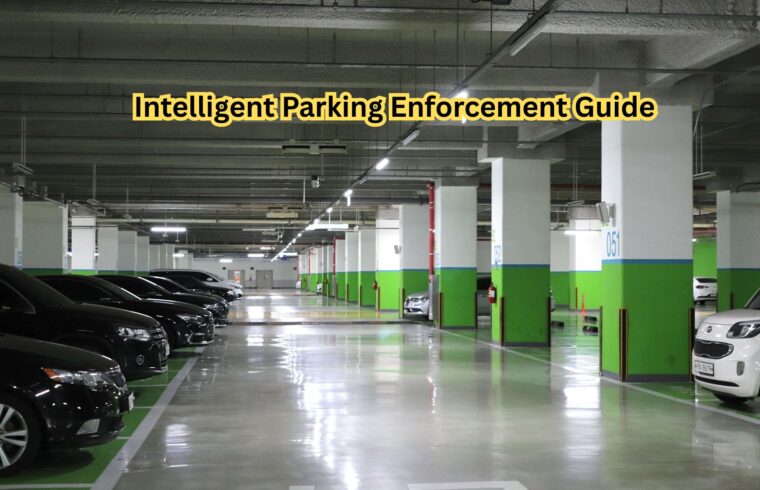
ntelligent Parking Enforcement Guide
The way private properties and cities handle parking compliance is rapidly evolving due to intelligent systems. Intelligent Parking Enforcement Guide highlights how automation, sensors, and real-time data are transforming enforcement into a faster and more accurate process. These advanced technologies reduce manual effort, minimize disputes, and improve operational efficiency. By following an Intelligent Parking Enforcement Guide, operators can ensure fair usage of parking spaces while enhancing transparency. Overall, adopting an Intelligent Parking Enforcement Guide helps create a smoother and more user-friendly parking experience for both managers and drivers.
How Intelligent Systems Work
To keep an eye on parking behavior, intelligent parking enforcement systems use cameras, cloud-based software, and license plate recognition. These systems automatically identify infractions like parking without permission or overstaying. Enforcement teams can act quickly since data is processed instantaneously. This automation greatly lowers the possibility of human error in day-to-day operations and guarantees consistent monitoring.
Key Technologies Behind the System
Intelligent parking enforcement is powered by a number of technologies, including as mobile applications, Internet of Things devices, and artificial intelligence. While IoT sensors monitor the presence of vehicles in real time, AI assists in pattern analysis and violation detection. Law enforcement personnel can rapidly access information through mobile apps. When combined, these technologies provide a networked ecosystem that enhances precision and operational effectiveness.
Benefits for Property Owners
Intelligent enforcement systems are very beneficial to property owners. By lowering unpaid parking and enhancing compliance, these solutions boost income. By reducing the need for manual patrols, they also save operating expenses. Property managers also have access to comprehensive statistics and analytics, which aid in decision-making and maximize the utilization of parking spots.
Improved User Experience
By streamlining and streamlining procedures, intelligent parking enforcement improves the customer experience. Clear instructions, automatic alerts, and simple payment methods are provided to drivers. Digital evidence facilitates the rapid resolution of disputes. This ensures a smoother parking experience while upholding stringent enforcement requirements by lowering user irritation and fostering user trust.
Real-Time Monitoring and Analytics
An essential component of intelligent parking systems is real-time monitoring. Operators have access to real-time data on payments, infractions, and parking occupancy. Peak hours and consumption trends are revealed via advanced analytics. Planning more effective methods, increasing the effectiveness of enforcement, and optimizing the use of parking resources are all made possible by this information.
Automation and Reduced Human Effort
Automation plays a key role in reducing the dependency on manual labor. Tasks such as violation detection, ticket issuance, and reporting are handled automatically. This not only saves time but also ensures consistency in enforcement. With fewer manual processes, teams can focus on improving service quality and addressing complex operational challenges.
Challenges and Considerations
Intelligent parking enforcement has drawbacks despite its benefits. Integration with current systems may take work, and initial setup expenses may be considerable. Data collection-related privacy issues also need to be properly considered. However, these difficulties can eventually be successfully handled with careful preparation and adherence to rules.
Future of Parking Enforcement
Smarter, more integrated solutions are the way of the future for parking enforcement. Accuracy and prediction skills will be further enhanced by developments in AI and machine learning. Parking management will become more effective through integration with smart city infrastructure. Intelligent parking enforcement will continue to be essential to contemporary urban development as technology advances.